Self-Awareness and Emotional Intelligence Coaching with Lumina Spark
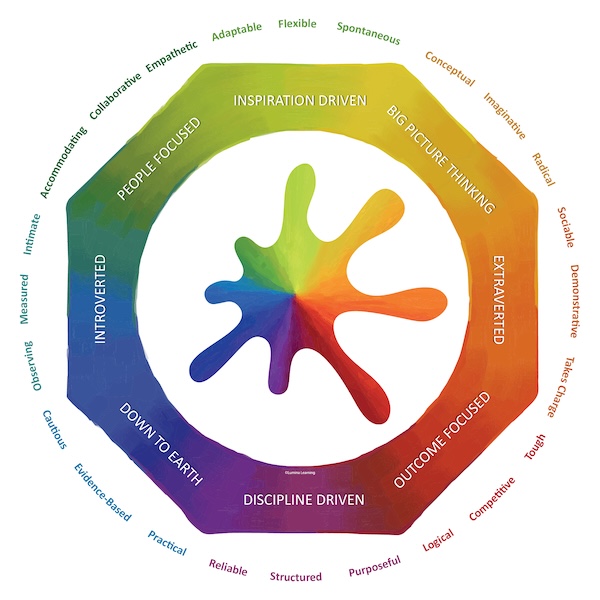
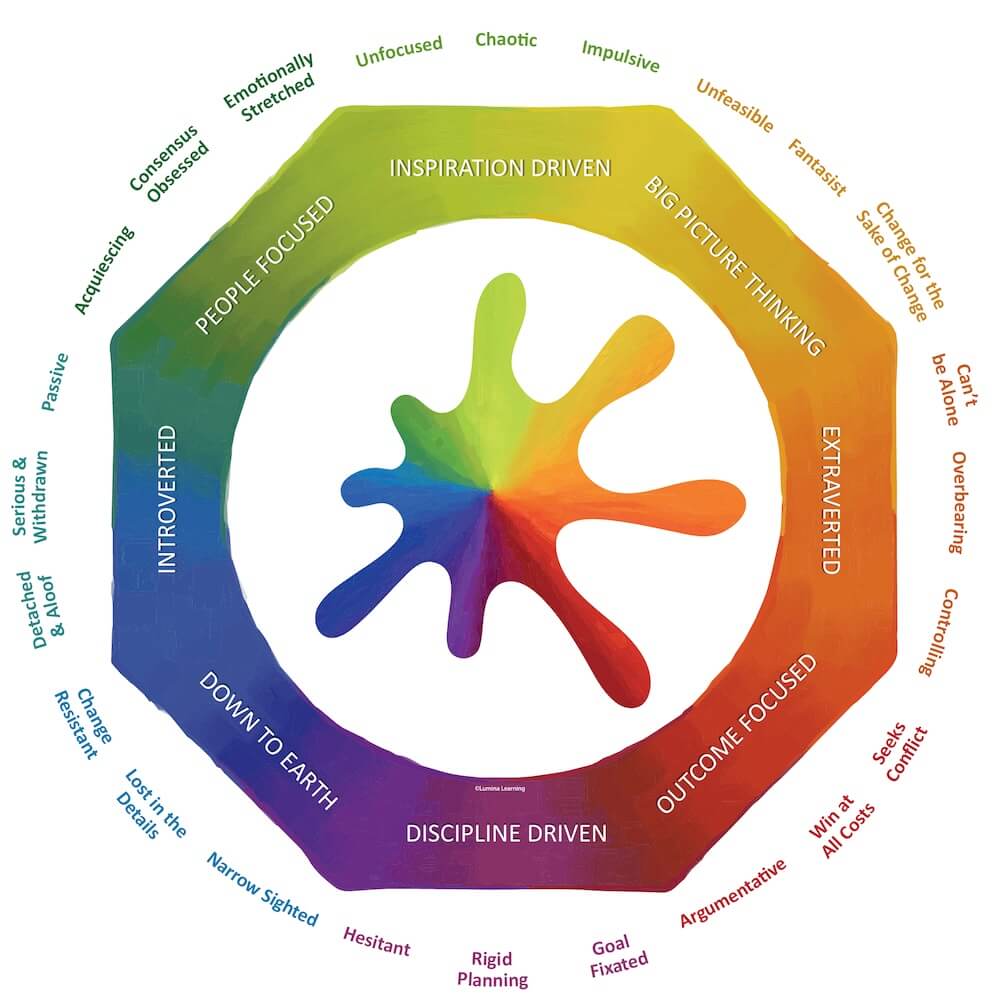
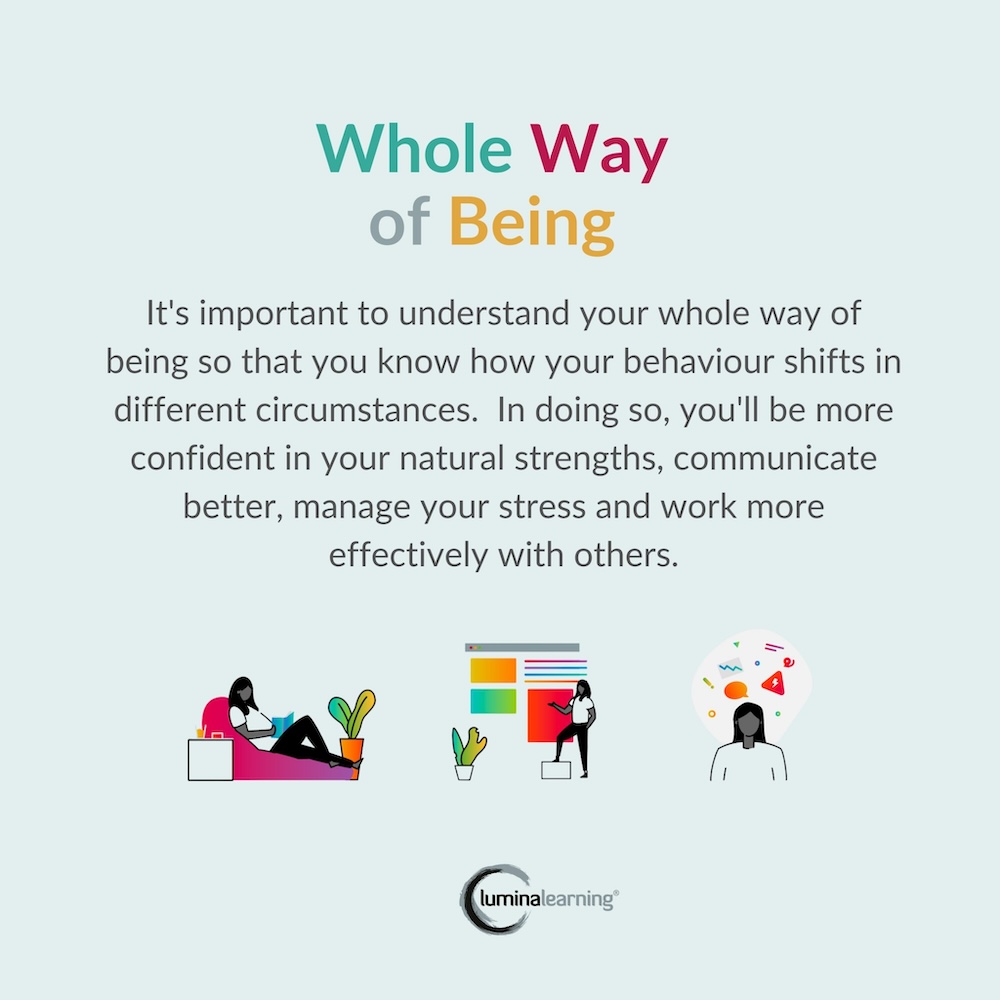
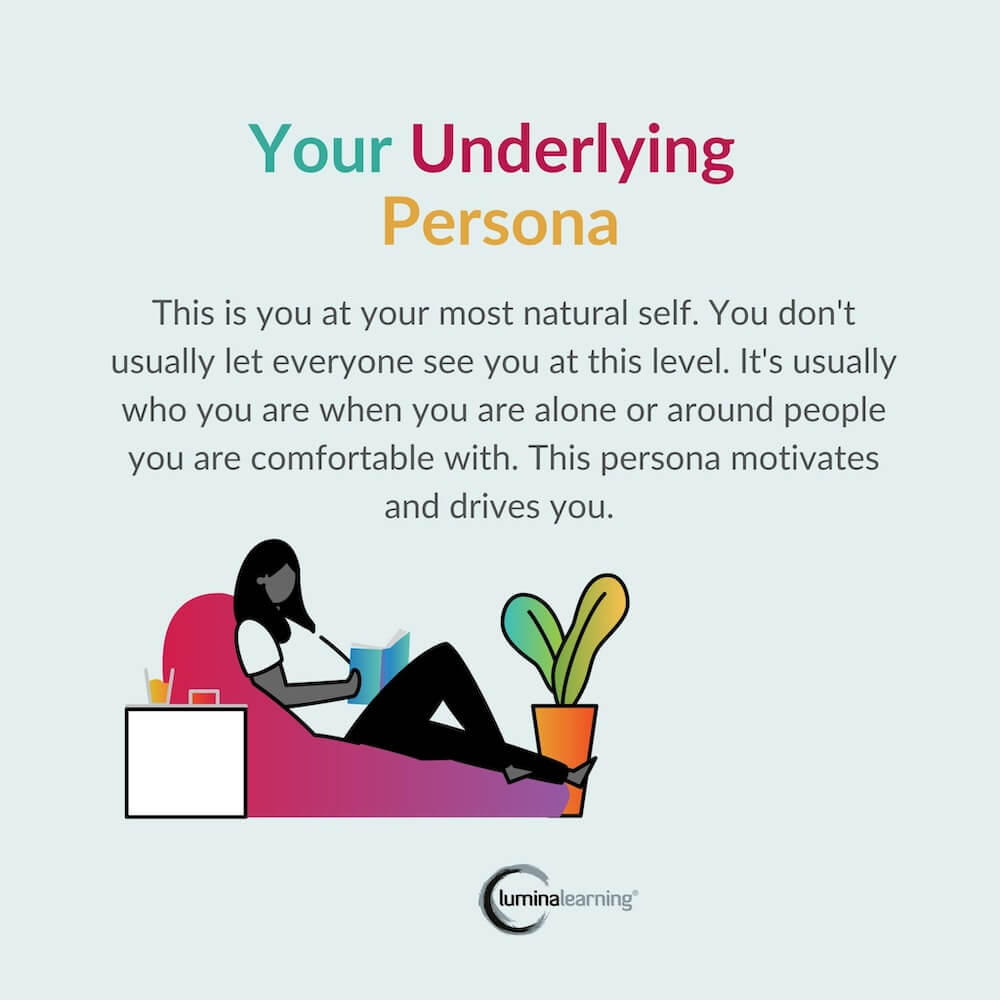
- Underlying Persona - Your instinctive way of being, your preferences, and your natural inclinations
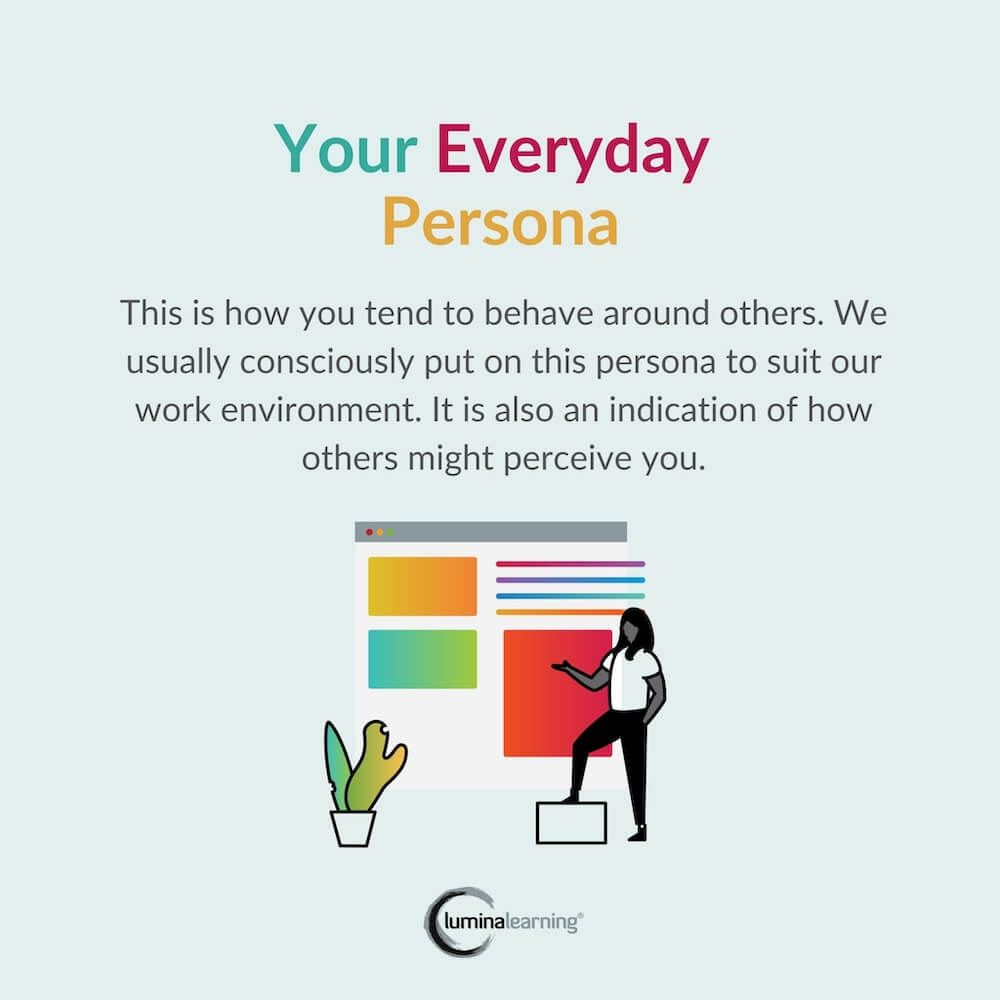
- Everyday Persona - How you behave day-to-day, tuning up and down your qualities contextually
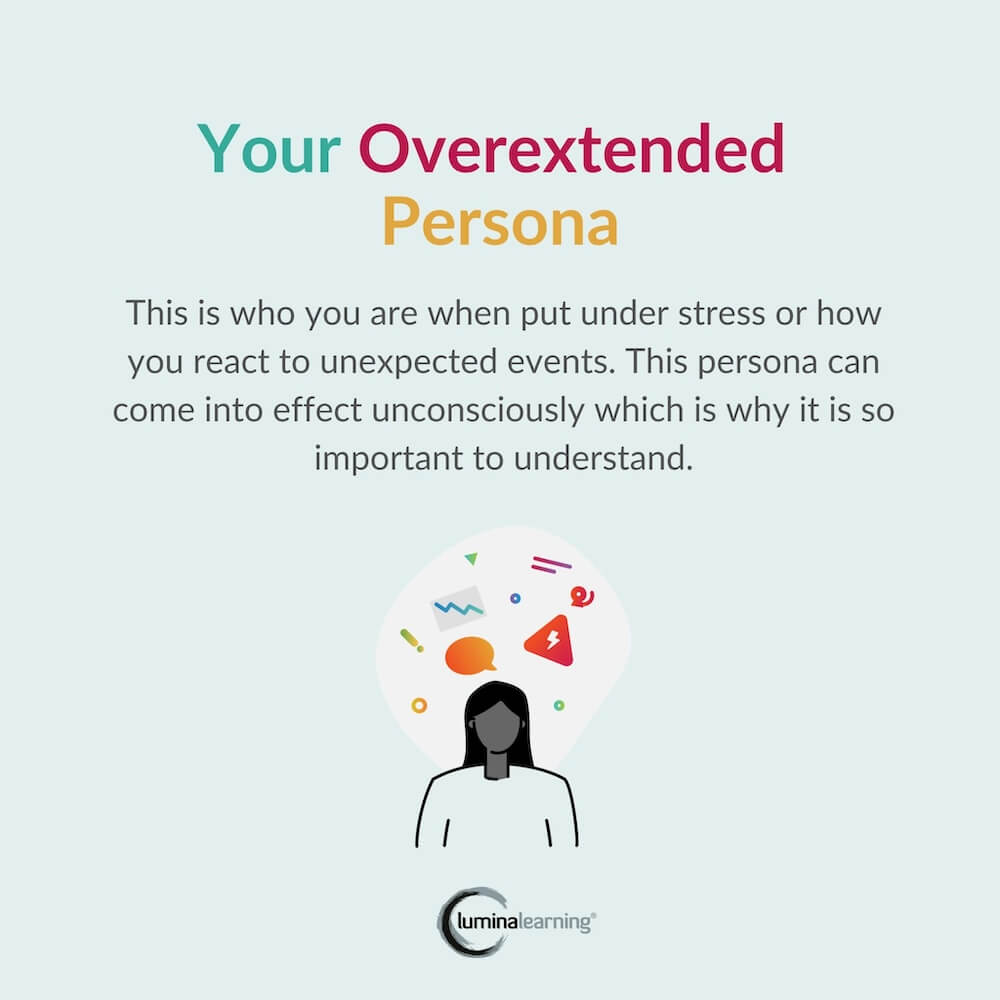
- Overextended Persona - When you do too much of a good thing, and overplay your natural strengths
- All of your personality all of the time - No labels, no boxes, no stereotypes!
What is it for?
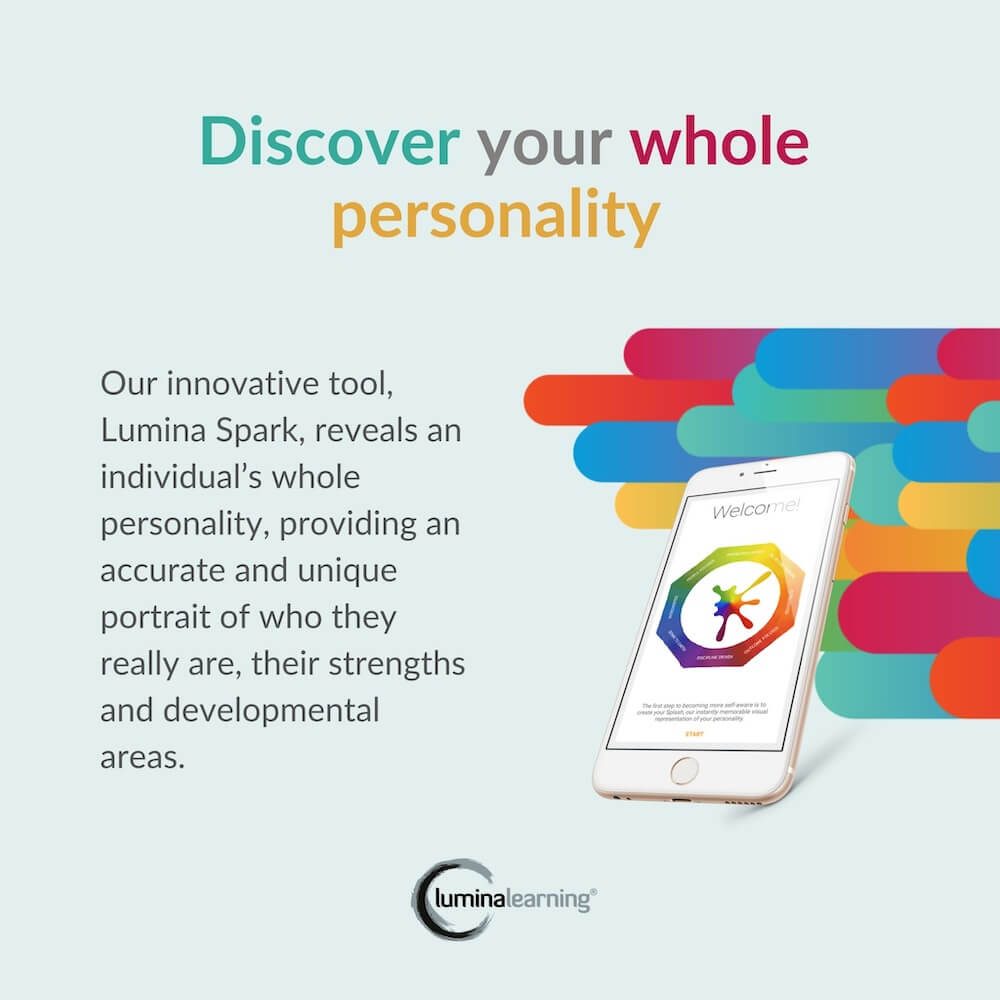
Lumina Spark provides an accurate, personalised reading of an individual’s strengths and developmental areas. Whether you’re the CEO or a new recruit, it provides rich personal insights and practical benefits for everyone.
What problems does it solve?
Lumina Spark provides a personalised portrait of your whole personality. It speaks directly to people, providing a report uniquely about them as individuals – not about people who are similar to them. The model is simple to understand, yet contains great depth by directly measuring 72 personality qualities. This is why Lumina Spark is the choice of so many organisations for selection, training and development.
- Increased self-awareness
- People working better together, creating better results
- Improved working relationships and productivity
- Improved understanding of how to cope with stress
Lorem ipsum dolor sit amet, consectetur adipiscing elit. Ut elit tellus, luctus nec ullamcorper mattis, pulvinar dapibus leo.
Frequently Asked Questions
- Lumina gives feedback at a 4-quadrant colour level which is a useful high-level way to understand self and others.
- Card games are often used to create a safe-container as well as to give and receive feedback.
- Integration with Jungian preferences. Lumina 4 colours and 8 aspects are correlated with Jungian preferences.
- The language is used to create an understanding and respect for personality diversity, as well as remove judgmental thinking.
- The methodology is used to speed read others’ personalities and communication preferences; and subsequently to adapt behaviour in relation to others’ needs in order to build rapport, connect or influence others.
- Many tools ‘claim’ to report on everyday and under stress, calling it “too much a good thing”.
- Lumina has been developed on the rigor of the Big Five personality theory; correlated with the popular Jungian preferences; integrated with colour to make it practical, and uses non-judgmental language to embrace and normalise all aspects of human behaviour and preference.
- Lumina measures traits / preferences and not types as in MBTI and DISC. Lumina Learning Resource
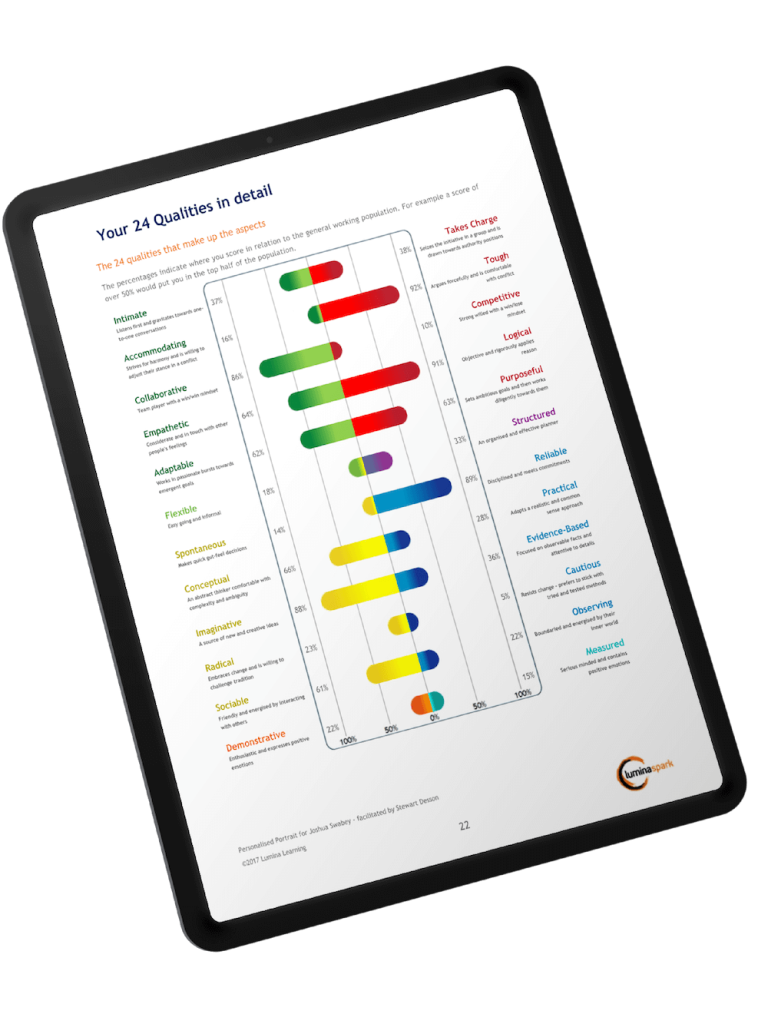
www.luminalearning.com - Most critically, Lumina measures 3 personas of 24 qualities. No assumptions or inferences are made. This provides depth, nuance and texture.
- Other tools give feedback on the “stressed” state but they do not measure it. Instead it is assumed or inferred from one’s dominant characteristic. However, research shows that how one behaves when under stress may or may not relate to their dominant traits or key strengths. There are many different anomalies all of which paint a unique and real picture for the individual. By understanding their patterns, they can make choices about which strengths to acknowledge and possibly amplify, and which weak spots or over-extensions are de-railers and need to be developed.
Please see below a few Lumina examples of persona graphs where natural strengths do not lead to over-extended behaviour, instead ‘stressed’ behaviour shows up in other areas.
High on ‘Tough’ underlying and everyday but their over-extended ‘Tough to seek conflict’ is very low
Or as you can see to the right, low on green ‘Accommodating’ underlying and everyday, yet over-extends and becomes ‘Accommodating to Acquiescing’.
Or high underlying natural preference on the blue ‘Evidence-based’, doesn’t show attention to detail everyday, and then when stressed returns to natural state but in an over-extended way and becomes ‘Lost in the detail’. - Lumina measures both ends of a continuum. This enables people to see where they embrace paradox. For example, as shown in the Splash below they may be high on both “logical” and ‘empathy’, embracing both the head and heart when making decisions. Another example could be high on both ‘conceptual’ and ‘practical’ showing that they can understand complexity yet also translate it into grounded action.
Lumina Learning Resource
www.luminalearning.com - In any 4-quadrant model, the narrow-focus can naturally lead to stereotyping, labelling and missing a key element of someone’s personality. By measuring the 24 qualities at the 3-persona level it is impossible to stereotype as one immediately sees their diversity across the percentiles. A clear indication of this is when we frequently find that one may be lowest in one colour of the 4 colour graphs but that same lowest colour can show up as the highest at the quality level. The example below shows the Empowering Green scores 5%, yet when you turn a few pages on you can see that ‘Collaborative’, a green quality is one of his highest qualities. This shows how the over-simplification of a 4 Quadrant model can negate key information that can limit one’s self-understanding.
Green is very low at the 4-colour level, yet at the quality level Collaborative is both naturally and everyday very high. If one just looked at the 4 colours, the talent and preference for team collaboration would have been unknown.
Any 4-quadrant model suffers from the limitation of remaining at the 4 quadrant state only. The cost of averaging and simplicity is humorously conveyed by a quote in 1958 by a statistician: ‘I have my head in the oven, my feet in the fridge, but I’m at the perfect temperature’. This is a bit like someone scoring 50% on Green (at 4 colour level) yet they score 100% collaborative and 0% empathetic. - While we embrace the value of the 4-colours, the story that unfolds and the depth of the Lumina Spark portrait prevents any form of stereotyping. Lumina shows how we move, we change, we are multi-layered and perfectly complex!
- Lumina allows for client customisation of the Spark Portrait and workbook so that it looks and feels internally owned. Client processes and models
Lumina Learning Resource
www.luminalearning.com - Could also be integrated into the portrait and can be produced independently using our intuitive online system.
- Our platform enables single-sign on so the Lumina portraits can be accessed directly through the clients’ portal without requiring extra passwords.
- The Lumina Splash app is a fun and dynamic way to compare and contrast personality preferences and develop communication strategies to improve relationships.
- The Team app is a dynamic way to understand the team personality, its’ movement between the 3 personas, and its’ alignment to team strategy and goals.
Lumina speaks both to one’s motivation and observable behaviour.
- The Underlying Persona reflects one’s inner motivation, natural tendency and desire. Preference, a dispositional trait (deep inside; may be genetic)
- The Everyday Persona reflects observable behaviour or how one sees themselves behaving everyday. It could be a combination of how one wants to be, how one sees themselves and how they actually are. It’s the ‘public us’.
- Lumina carried out a consensual validity study, which showed a high correlation between the self-report and 360 scores, supporting the accuracy of the portrait output.
- Interestingly, people tend to rate higher what they believe is good, which consequently leads to an accurate output.
- There is general research evidence that the self-report bias is minimal and does not affect overall results.
- 360 has other forms of subtle bias as it can be hard for others to know and observe your internal motivations, unless you know them very well.
Lumina Learning Resource
www.luminalearning.com - The Lumina Emotion self-report also includes an impression management score to assess the extent of any personal bias.
Yes, Lumina is strongly aligned to Non-Violent Communication (NVC). NVC suggests that we all have the capacity for compassion and that all behaviour stems from a desire to meet universal human needs. The inspiration driving Lumina is Victor Frankl’s work which enables people to recognise the space in between a trigger and response and to move from unconscious reactive behaviour to a conscious response. Lumina’s core message is to drop judgments, to understand the essence of the other, to seek out where the other person is coming from and adapt your behaviour to respect and build rapport. Lumina’s three personas allow us to build deep insight, awareness and compassion for ourselves and for others. Lumina creates a level playing field and a safe space for conversations about shared understanding and improved communication.
The Lumina feedback model is based on Albert Ellis work and overlaps strongly with the non-violent communication model and approach. Lumina assigns colours to the different stages of providing feedback.
- Blue: Observation, Facts
- Green: Feeling, Needs, Values, Desires
- Yellow: Interpretation, story
- Red: Way forward, action, my request
The four components of the NVC model overlap with the 4 Lumina principles:
- self-knowledge
- building rapport
- valuing diversity
- co-creating results.
In addition, NVC is closely aligned to the 4 Lumina Emotional Agilities:
- being self-aware
- being aware of others
- managing emotions
- taking meaningful action
Lumina Learning Resource
www.luminalearning.com
Like most Big Five measures of personality we do find some cultural differences as well as gender differences. These are aligned to those found in the wider literature. However, these ‘effect sizes’ of these differences are generally small (usually small differences between averages), also the variability within the culture is greater than any we find across cultures.
The evidence suggests these differences reflect slight variations in cultural norms, rather than a bias or prejudice against a certain group. Lumina Spark is a humanistic tool and aims to eliminate any bias towards ‘favourable’ versus ‘unfavourable’ traits (regardless of culture). All traits are measured positively and equally valued.